
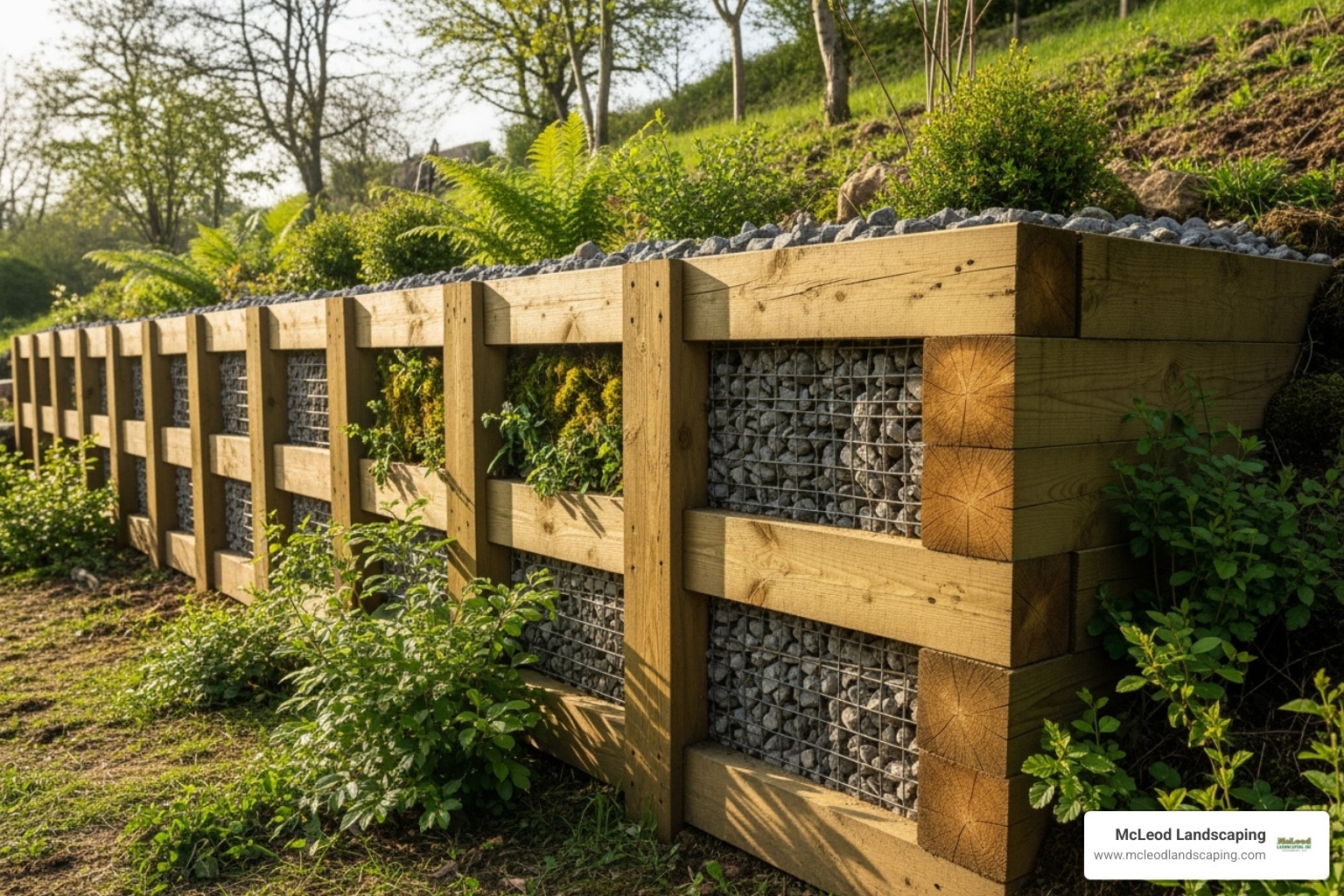
A timber crib wall is a gravity retaining wall that uses interlocking treated timber components to form a cellular framework. This framework is filled with free-draining stone, creating a heavy, stable mass that holds back soil.
Key Facts About Timber Crib Walls:
Timber crib walls offer a natural-looking, cost-effective, and quickly built alternative to concrete or masonry. The timber framework creates a cage-like structure, and the heavy stone infill provides the weight to resist soil pressure. Its open design allows water to drain freely, preventing the hydrostatic pressure that causes many retaining walls to fail.
As Scott McLeod, owner of McLeod Landscaping, I’ve seen the value of these systems over three decades. For projects needing both structural integrity and natural aesthetics, timber crib walls are an excellent choice.
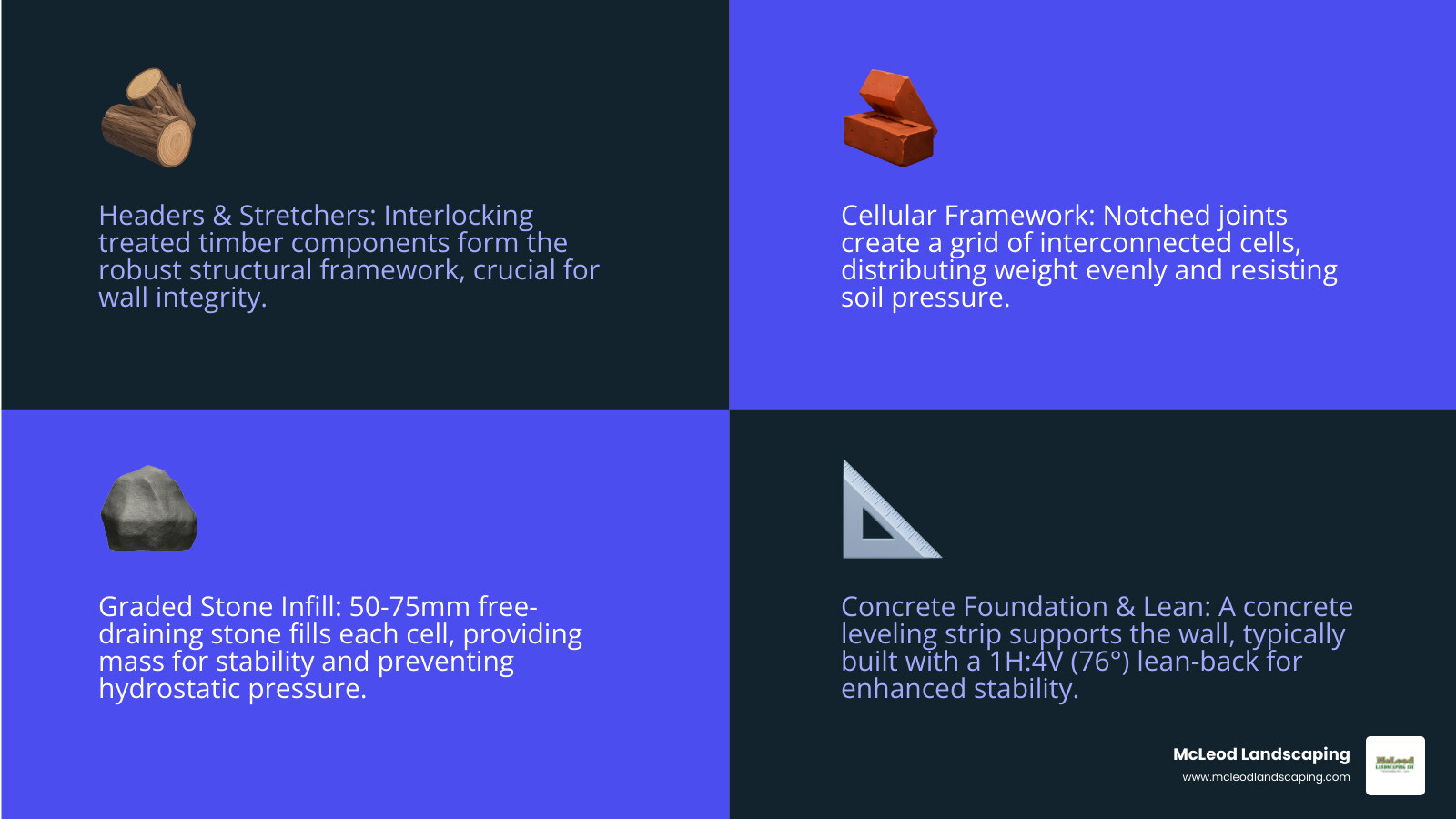
Timber crib wall vocab explained:
Think of a timber crib wall as a large-scale, engineered building block system. It’s a gravity retaining wall, meaning it relies on its own mass to hold back soil. The design’s strength lies in its cellular structure, created by interlocking timbers that form a framework of open boxes. These cells are filled with heavy stone, and the combined weight of the timber and stone creates a stable unit that resists the lateral pressure from the soil.
When soil presses against the wall, the entire structure acts as one cohesive unit, with the weight of the stone-filled cells counteracting the pressure through gravity. A key advantage is that the structure is permeable, allowing water to flow through freely. This prevents hydrostatic pressure (water buildup behind a wall), a primary cause of retaining wall failure. For more on how different systems compare, see our guide on retaining wall design principles.
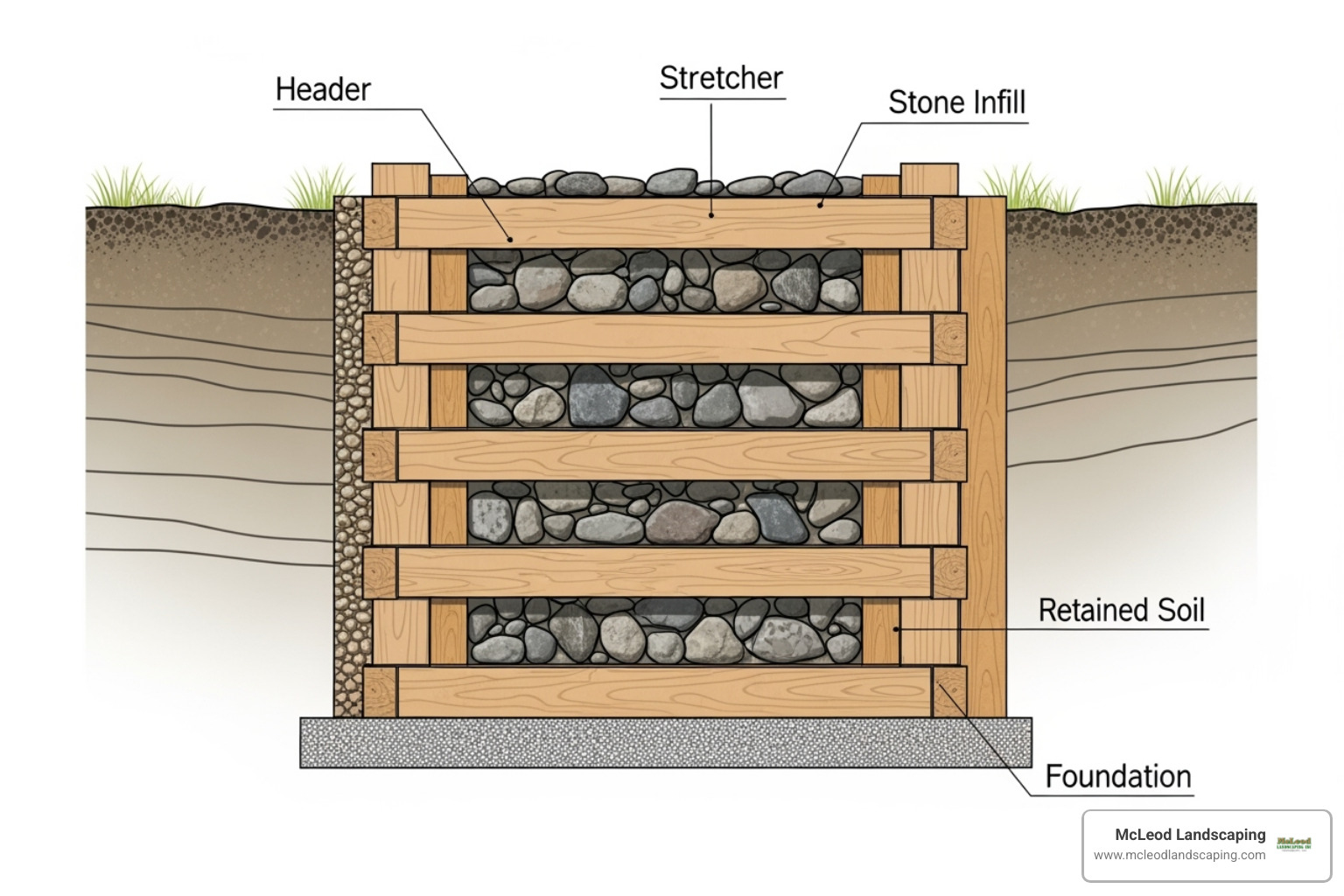
Every timber crib wall is built from two types of precision-cut timbers that interlock to form a stable grillage, or timber cage.
Stretchers run horizontally along the face of the wall. These 2.4-meter-long timbers form the front and back lines of each cell.
Headers run perpendicular to the wall face, from front to back. Their length (0.6m, 0.9m, 1.2m, or 1.5m) determines the wall’s depth and stability. Each layer, or course, adds 161mm of height.
Each timber has precisely cut notches that allow headers and stretchers to interlock securely without nails or screws. This engineered connection distributes weight and pressure evenly, giving the wall its distinctive look and structural strength. If you’re interested in other timber retaining options, our article on landscape timber retaining walls covers more.
The timber framework is only half the system; the infill provides the necessary mass. The best material is clean, graded stone between 50mm and 75mm. This coarse aggregate is heavy, adding the weight needed to resist soil pressure, and it drains freely.
Excellent drainage is essential. Water flows through the open spaces between the stones, eliminating the hydrostatic pressure that can destroy retaining walls. This also helps keep the timber drier, extending its lifespan.
Never use soil or sand as infill. These materials trap water and create the very pressure the wall is designed to prevent. Clean recycled aggregate (like 6F2 material) can be an alternative if it meets drainage requirements. The infill is placed and compacted in layers as the wall is built, ensuring uniform density and stability. For more on managing water, see our resource on retaining wall drainage.
Building a timber crib wall is a satisfyingly fast process. Unlike pouring concrete or stacking heavy blocks, the interlocking components assemble quickly, changing a slope into a sturdy retaining structure. The process follows a logical sequence: prepare the site, build a solid foundation, and assemble the wall with precision.
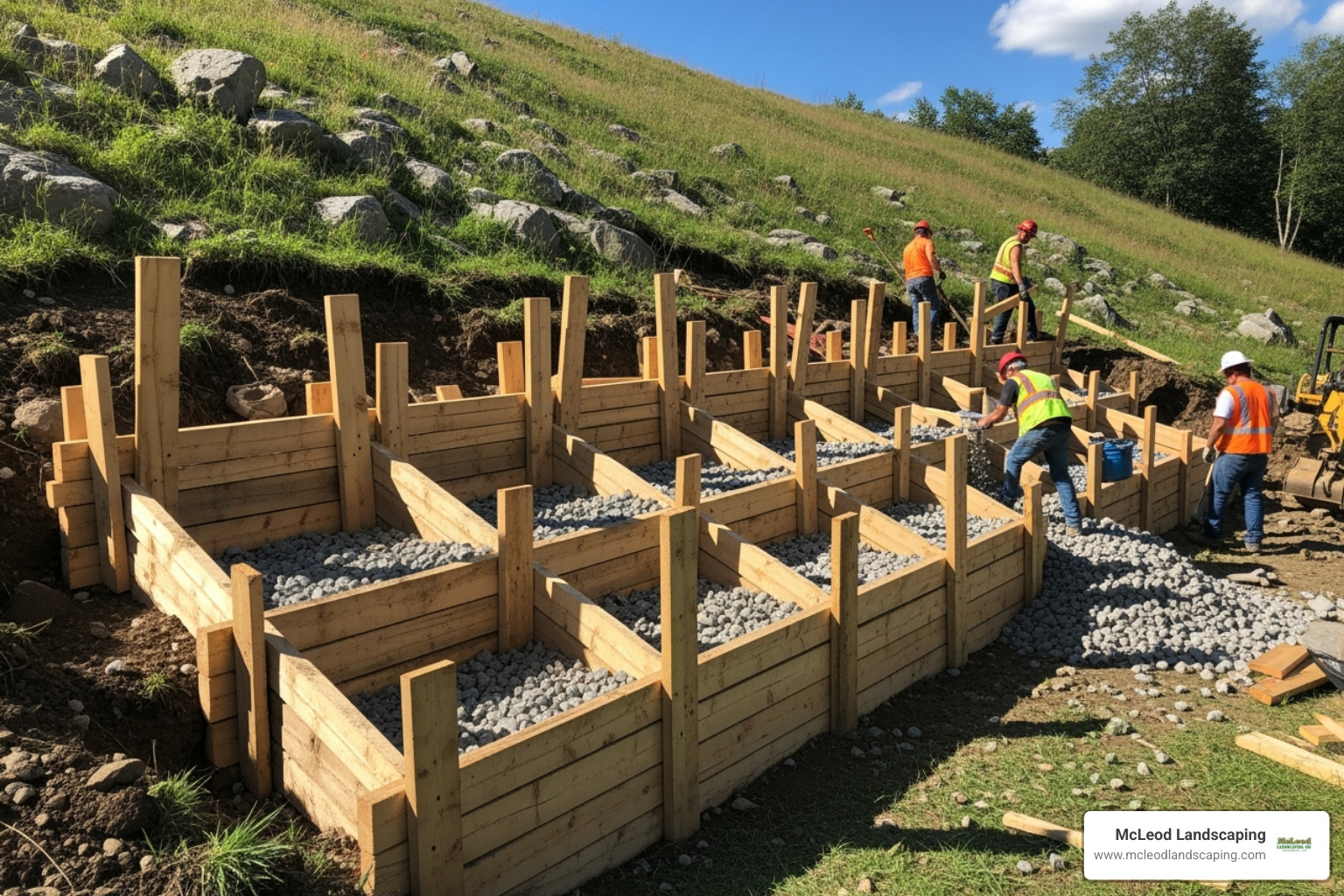
Construction begins with thorough site preparation, clearing vegetation and excavating to solid ground. Next, we install a concrete leveling strip to provide a firm, level base. This foundation is critical for distributing the wall’s immense weight and preventing uneven settlement.
Once the foundation is ready, assembly begins. The pre-cut, treated timbers interlock via precisely cut notches. The first course is laid on the foundation, and the wall is built upward layer by layer. As each timber course is added, the resulting cells are filled with graded stone and compacted. This methodical process—timber layer, stone infill, compact, repeat—continues until the wall reaches its designed height. Our retaining wall installation guide offers more detail on the process.
The foundation for a timber crib wall must be perfectly level and establish the wall’s lean angle. These walls are not built vertically; they are designed with a deliberate lean back into the slope at a ratio of 1H:4V. This translates to a 76-degree angle from the horizontal, meaning for every four feet of height, the wall leans back one foot.
This backward tilt is an engineered feature that uses gravity to improve stability, pressing the wall’s weight back against the soil. We typically rake the concrete foundation at this 1:4 angle from the start, ensuring a consistent lean from the first course to the top. Understanding these details is key when you build a retaining wall on a slope.
The construction speed of timber crib walls is a major advantage. An experienced operator can build about 3.5 square meters of wall per hour. This is approximately three times faster than gabion walls and up to ten times faster than concrete or masonry.
This speed comes from the modular, pre-cut system that requires no curing time or mortar. For commercial projects, this means lower labor costs and less site disruption. For homeowners, it means the project is finished much faster. This efficiency is a hallmark of well-planned hardscape construction that stays on schedule and on budget.
A timber crib wall is an engineered structure designed to withstand significant earth pressures for decades. Success depends on thoughtful design and quality construction from the start.
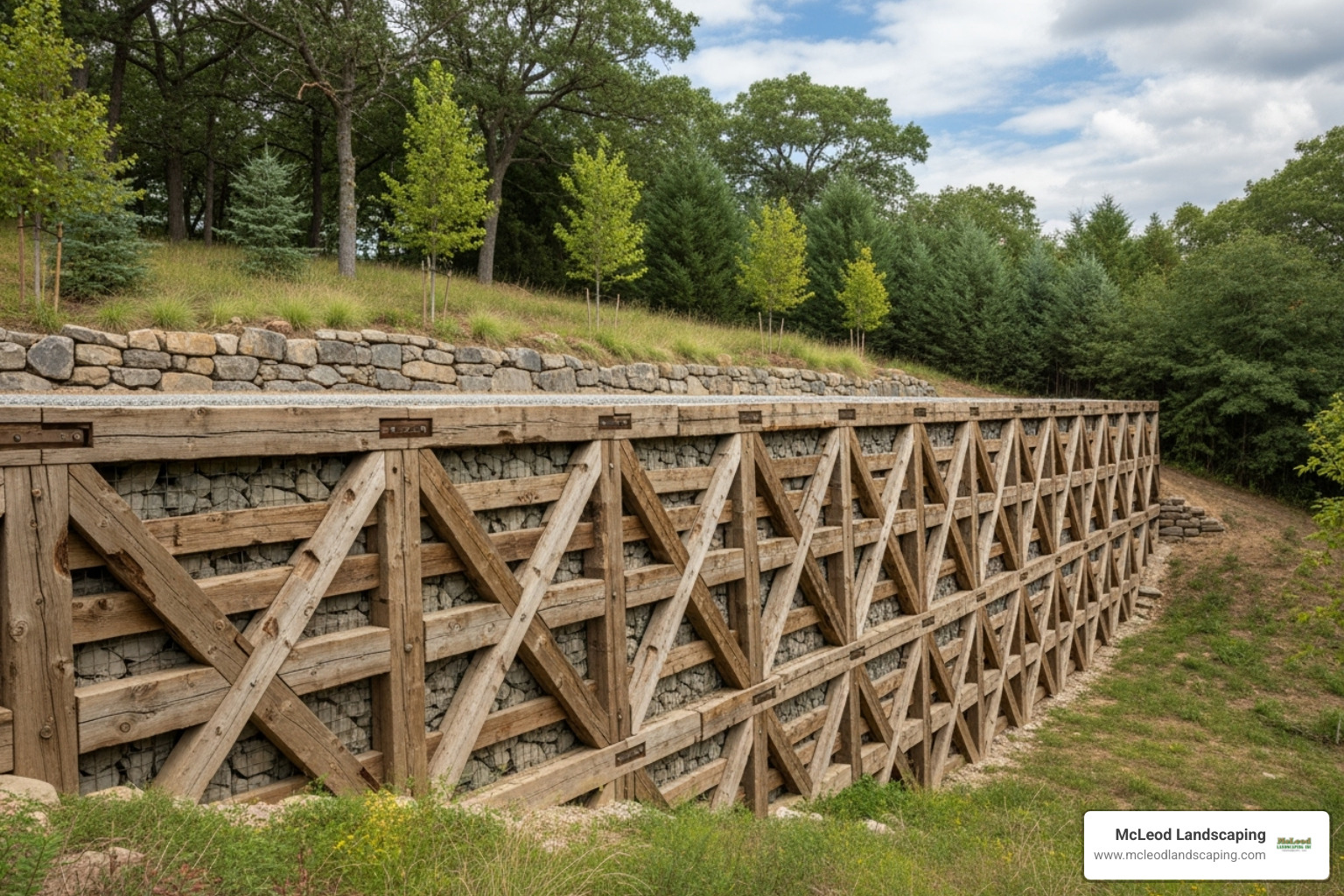
A properly engineered wall requires calculations from qualified structural engineers who consider site-specific conditions like soil type, surcharge loads (from buildings or driveways), and wall height. This ensures the wall performs reliably for years. For more on robust retaining structures, explore our main resource on retaining walls.
Several critical design elements ensure a stable and resilient timber crib wall:
The design life of a timber crib wall ranges from 15 to 60+ years. This wide range depends heavily on timber treatment quality and construction practices. While many manufacturers advertise a 60-year service life, this is only achievable with high-quality materials and installation.
The best systems use PEFC certified timber, such as pressure-treated Radiata pine, which absorbs preservatives deeply. High-quality treatments like copper azole, applied to standards such as BS8417:2011, aim for full cell penetration to resist rot and insects. Proper installation, including correct compaction and drainage, is equally crucial for longevity.
Understanding potential weaknesses helps prevent them. Common issues include:
Most failures are partial, not catastrophic. Catching these issues early can prevent more serious problems. While different from block walls, the core principles of structural integrity apply to all retaining walls.
Timber crib walls offer a rare balance of structural capability, natural aesthetics, and environmental sensitivity. They are strong enough for industrial use yet attractive enough for a residential garden, making them a versatile choice for many of our clients.

This versatility is where the distinction between hardscaping vs landscaping becomes clear, as these walls serve both functional and aesthetic roles.
The versatility of timber crib walls allows for their use in diverse settings:
Whether you’re exploring landscape retaining wall ideas or need a robust commercial solution, timber crib walls offer proven functionality.
Timber crib walls are generally cost-effective, but pricing varies based on project-specific factors.
Important note: The cost estimates below are average figures gathered from internet data and do not represent actual McLeod Landscaping pricing. For an accurate quote custom to your specific project, please contact us directly for a professional estimate.
| Retaining Wall Type | Average Cost Per Linear Foot (Internet Data) | Typical Range Per Linear Foot (Internet Data) |
|---|---|---|
| Timber Crib Wall | $40 – $70 | $30 – $250+ |
| Concrete Block Wall | $30 – $60 | $20 – $200+ |
| Poured Concrete Wall | $50 – $90 | $40 – $300+ |
| Gabion Wall | $35 – $65 | $25 – $200+ |
This wide range exists for several reasons:
For a broader perspective on expenses, our article on how much does a retaining wall cost? provides helpful context.
While timber crib walls are low-maintenance, some attention over their lifetime ensures optimal performance. Understanding what to look for and knowing your repair options can save time and money. Our experience with hardscape repair services shows that prevention is key for any retaining structure.
Timber crib walls don’t need painting and won’t crack like concrete, but routine checks are wise.
If a wall shows significant distress, it’s time to call professionals. Modern repair solutions can often stabilize the existing structure and improve drainage without requiring a full replacement. This “repair, don’t replace” approach can extend the wall’s life with less disruption and environmental impact. If you notice any concerning changes, contact an experienced retaining wall contractor right away.
While all timber crib walls share the same concept, there are differences in manufacturing and certifications.
Most modern systems use proprietary, pre-cut components engineered for integrity and easy assembly. The standards governing these systems are crucial for ensuring longevity.
Understanding these certifications helps you select a quality system. Not all timber crib walls are equal, and knowing the standards can make a significant difference in durability, whether you choose timber or concrete retaining walls.
After three decades of building retaining walls, we’ve answered many thoughtful questions about timber crib walls. Here are the most common ones.
Yes, and it’s one of their best features! A timber crib wall can become a living part of your landscape. During construction, we can install planter bags within the cells to create dedicated growing pockets. The wall’s free-draining nature is excellent for plants, preventing waterlogged roots.
Suitable plants include trailing varieties like sedum, groundcovers like periwinkle, and smaller shrubs. These plants soften the structure’s appearance and can help with slope stabilization, turning an engineered solution into a beautiful green feature.
Timber crib walls can reach impressive heights of up to 10 to 12 meters (about 33 to 40 feet). Building a wall this tall requires significant engineering expertise. Taller walls typically need a wider base, longer header timbers, or even double or triple depth structures to ensure stability.
The design must account for immense soil pressure and any additional surcharge loads from traffic or structures above. While most residential walls are 1 to 3 meters high, the system is capable of handling much larger projects when properly engineered.
The infill material is critical for both mass and drainage. We use clean, graded, free-draining stone, typically 50mm to 75mm in size (2 to 3 inches). This coarse aggregate allows water to pass through, preventing the hydrostatic pressure that causes many retaining walls to fail.
In some cases, suitable recycled materials like clean 6F2 aggregate can be used. However, you must never use soil or sand. These fine-grained materials retain moisture, create damaging pressure, and accelerate timber decay. Using the correct stone infill is essential for the wall’s long-term performance.
After three decades in this business, I can confidently say that timber crib walls offer a special combination of structural integrity, natural beauty, and practical efficiency. Their principle is simple: an interlocking timber frame filled with stone uses gravity to create a remarkably strong and versatile structure.
They blend into the landscape, can be built up to ten times faster than concrete, and are naturally permeable, which solves the critical issue of water pressure. Longevity, however, depends on quality. Properly treated timber and correct installation are key to achieving a 60-year service life.
Whether you need to create usable space, control erosion, or add a striking landscape feature, timber crib walls are a functional and environmentally conscious solution. They can even be vegetated, turning a structural necessity into a living wall.
At McLeod Landscaping, we build hardscaping solutions that last. If you’re considering a retaining wall, we can help determine if a timber crib wall is the right choice for your property. Request a professional retaining wall installation estimate and let’s explore the possibilities for your outdoor space.
Contact McLeod Landscaping today at (978) 640-0957 or click here to schedule a consultation for retaining wall installation. Let our experienced team design and install a functional and visually appealing retaining wall that enhances your landscape.

1881 Main St Unit 1, Tewksbury, MA 01876