
Giant retaining wall blocks are massive precast concrete units, weighing from 240 to over 7,200 pounds. They are designed to create strong, durable walls with faster installation times and superior structural integrity compared to traditional smaller blocks.
Key Facts About Giant Retaining Wall Blocks:
These massive units represent a shift from small segmental blocks toward more efficient construction, offering unique advantages in structural performance and installation efficiency. The construction industry has adopted these systems because they solve real problems: crews place fewer, larger units, covering more area and providing greater stability through sheer mass.
I’m Scott McLeod. With three decades in hardscaping, I’ve seen how giant retaining wall blocks transform complex projects. My team at McLeod Landscaping uses these systems for commercial and residential slope stabilization projects across the Merrimack Valley.
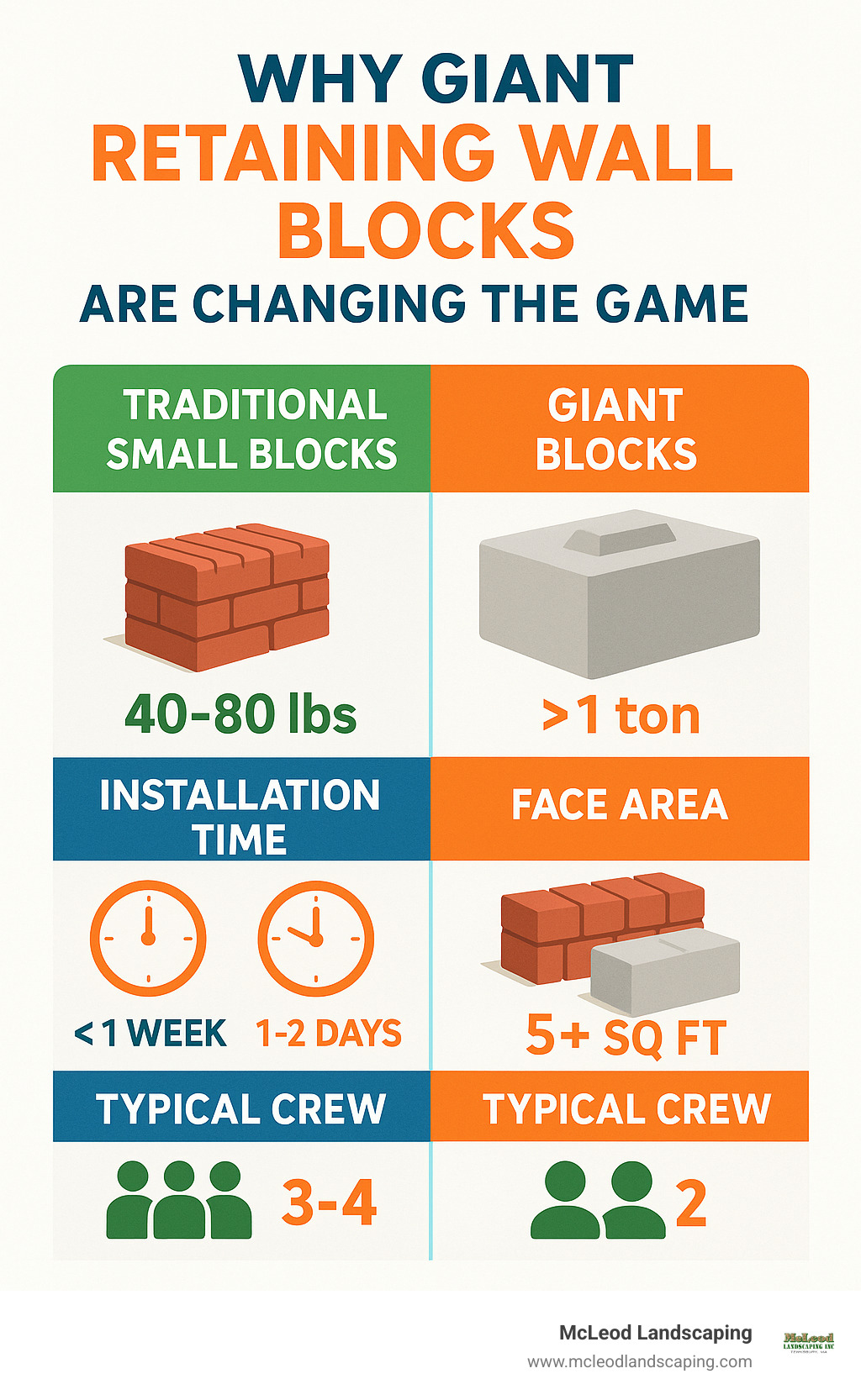
Common giant retaining wall blocks vocab:
Giant retaining wall blocks are the heavy-duty champions of earth retention. While typical landscape blocks weigh 30-50 pounds, these engineered precast concrete units can exceed 7,000 pounds.
The manufacturing process creates two main types. Wet-cast concrete blocks use a fluid mix poured into molds, resulting in dense, smooth units resistant to freeze-thaw cycles. Dry-cast concrete blocks use a drier, compacted mix for a more textured, porous finish. Both methods produce incredibly strong blocks, and our experience with concrete block retaining wall systems helps us choose the right type for your project.
The world of giant retaining wall blocks includes solid and hollow-core blocks.
Solid blocks are dense, heavy units relying on their mass for stability, making them ideal for gravity walls. A 2’x2’x4′ solid block weighs 2,000 pounds, while a 3’x3’x6′ giant can reach 7,200 pounds.
Hollow-core blocks have internal voids filled with aggregate during installation. This design makes them lighter to handle yet massive when filled, improving drainage and potentially reducing material costs.
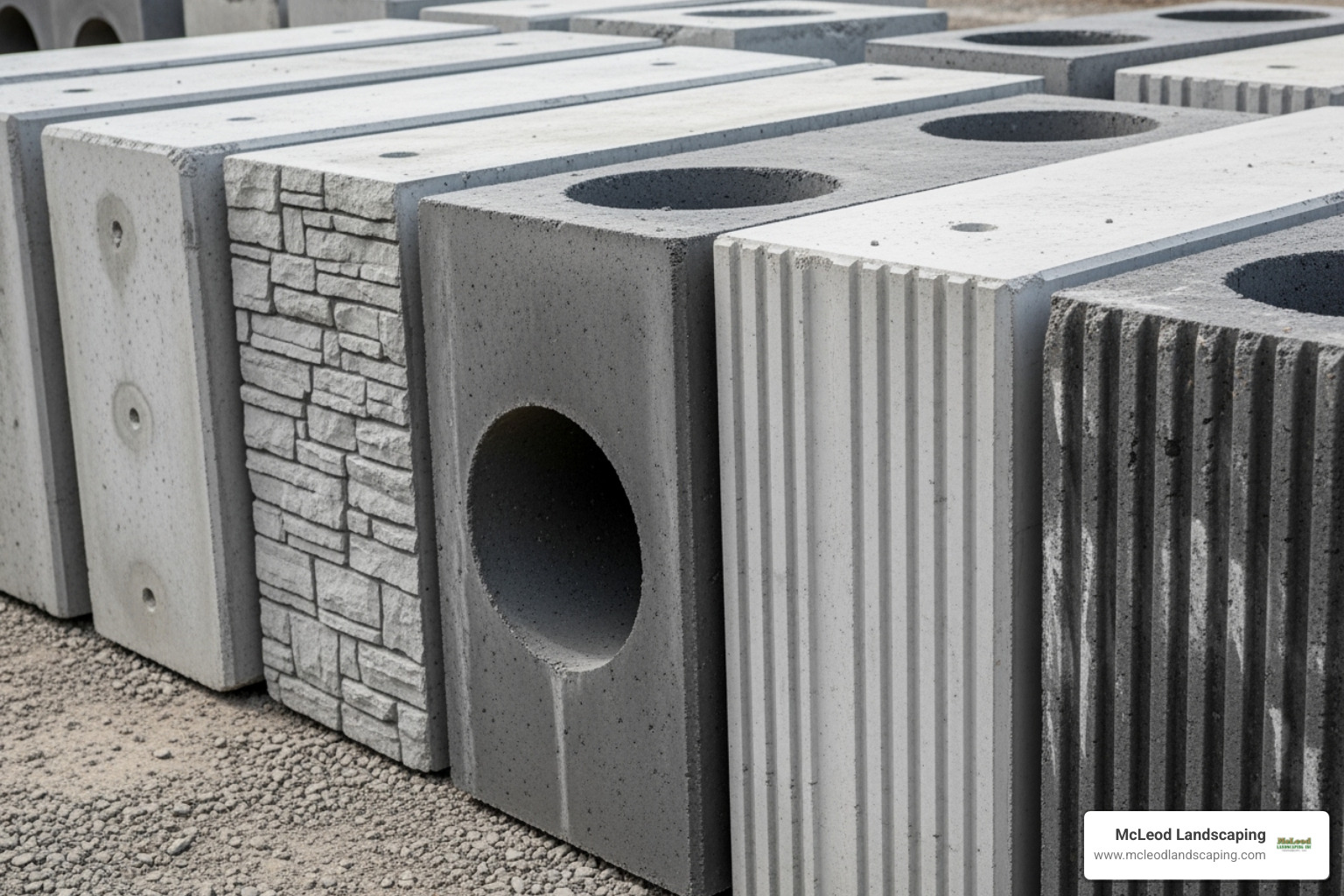
The size range is impressive:
These weights clarify why heavy machinery is non-negotiable for installation.
The effectiveness of giant retaining wall blocks comes down to three key elements.
Sheer mass is fundamental. In gravity walls, the block’s weight counteracts soil pressure, allowing for tall walls without extensive soil reinforcement.
Interlocking systems are ingenious, mortar-free connection methods. V-style blocks nest together for solid connections. Knob and groove technology uses protrusions and recesses to lock blocks in place. Top-pinning designs use pins for positive connections, allowing for curves and corners.
The high-strength concrete is formulated for massive compressive forces and weather exposure, ensuring long-term durability. Our work with concrete retaining walls confirms that when these three elements work together, the resulting walls are built to last.
When facing a challenging retaining wall project, giant retaining wall blocks solve problems more efficiently than traditional methods.

The most immediate benefit is faster installation. Since each block covers more area, a small crew can install up to 1,500 square feet daily, leading to significant labor savings. This speed means less on-site disruption for your property or business.
Another advantage is reduced excavation. These blocks often require less digging and soil reinforcement than other systems, minimizing landscape disturbance. Their structural stability and longevity are game-changers. The combination of mass and interlocking systems creates durable walls that last for decades, saving on future repairs. When considering what hardscaping services offer the best long-term value, this is a key factor.
The versatility of giant retaining wall blocks makes them ideal for demanding projects.
Our experience with landscape wall construction shows these applications benefit from the strength of large blocks. You can explore engineered block systems to see the possibilities.
Giant retaining wall blocks also offer environmental benefits.
When we approach retaining wall design, we consider these factors to create solutions that serve both immediate needs and long-term stewardship goals.
Building with giant retaining wall blocks is an engineered process designed to handle immense forces. The soil pressure behind a wall can be enormous, increasing with height and soil saturation.
That’s why we start with a thorough geotechnical analysis to understand the soil type and its properties. Drainage is also critical. Water buildup increases pressure, so we install systems with weep holes, crushed stone, and geotextile fabrics to manage water flow. We also account for surcharges—extra weight from driveways or buildings—in the wall design to ensure safety. As your trusted retaining wall contractor, we never cut corners on engineering.
| Feature | Gravity Walls | Geogrid Reinforced Walls |
|---|---|---|
| Primary Stability | Sheer mass of blocks | Interlocking blocks and reinforced soil mass |
| Max Height | Often limited to 20-25 ft (depending on block) | Can exceed 50 ft |
| Excavation Needs | Less extensive behind the wall | Requires wider excavation for geogrid embedment |
| Space Constraints | Ideal for tight spaces, closer to property lines | Needs more space behind the wall for geogrid |
| Ideal Use Cases | Moderate height walls, limited access, quick build | Tall walls, heavy loads, challenging soil |
You have two main approaches with giant retaining wall blocks.
Gravity-based systems rely on the sheer weight of the blocks to resist soil pressure. This approach is ideal for tight spaces where excavation is limited and can be used for walls over 20 feet high without reinforcement.
Geogrid reinforcement is used for taller walls or in challenging soil. These synthetic layers are placed in the backfill, interlocking with the soil to create a larger, stable mass. The trade-off is that geogrid requires more excavation space. When space permits, these systems can build walls over 50 feet high.
You can learn about gravity wall systems to see how these massive blocks work.
The installation process is straightforward but requires precision and the right equipment.
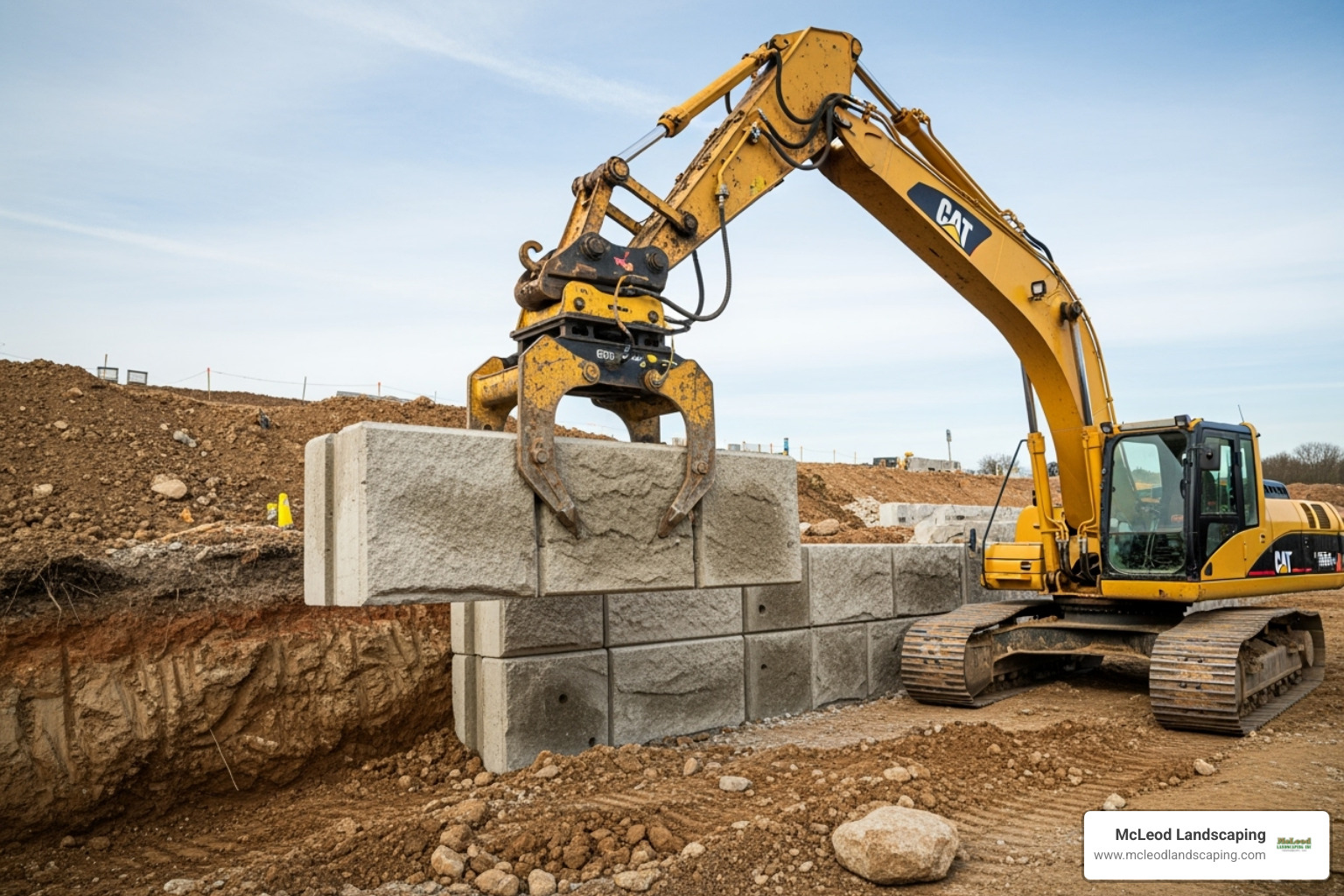
It begins with meticulous site preparation, including excavation and laying a compacted aggregate base course. This foundation is critical.
Heavy equipment is essential. Blocks weighing over 7,000 pounds require excavators or skid steers with specialized clamps for precise placement. The installation speed is impressive; a small crew of 2-3 can install up to 1,500 square feet per day.
Each course is backfilled with granular material and compacted in lifts to ensure drainage and stability. This methodical process, detailed in our retaining wall installation guide, results in a wall that stands for decades.
When considering giant retaining wall blocks, it’s important to look beyond the initial price tag at the total project cost and long-term value.
While the material cost per block is higher, the labor savings from faster installation and reduced equipment time can lower the total project cost, especially for large walls. Their durability is a key factor. A properly built wall offers decades of performance with minimal maintenance, saving you from future repair and replacement costs. This longevity adds significant value and an excellent return on investment.
For a realistic understanding of what you might expect to invest, check out our guide on how much a landscape retaining wall costs.
Important note: these are average costs based on internet data and not actual costs for McLeod Landscaping. Every project is unique, and we’ll provide you with a precise quote based on your specific situation.
The block price range varies. A standard 2’x2’x4′ block might cost between $80 and $250, while massive 3’x3’x6′ blocks can range from $120 to $400+ each. Manufacturer and block type also affect pricing. Aesthetic finishes like Ledgestone cost more than standard gray, and bulk quantities often come with discounts.
For installation cost per square foot, the speed of installation helps offset the higher material cost. Based on industry averages, you’re looking at $35 to $150+ per square foot for the complete project. A straightforward, lower wall on an accessible site hits the lower end, while a tall, complex wall with premium finishes can reach the higher range.
Investing in quality retaining wall stone and professional installation ensures excellent value for decades.
These blocks are not just functional; they can be genuinely beautiful.

Available natural stone textures are very convincing. Ledgestone face blocks offer a rugged, stacked-stone look, while cobblestone face textures provide a more traditional appearance. Smooth face blocks provide a minimalist aesthetic perfect for modern architecture.
Integral color, mixed into the concrete during manufacturing, provides consistent, fade-resistant color throughout the block. The blocks’ versatility allows for exciting designs, including curves and tiers and integrated steps, turning slopes into stunning landscape features. Our team enjoys bringing creative retaining wall ideas to life, ensuring your wall is both beautiful and practical.
Here are answers to the most common questions we receive about giant retaining wall blocks.
The maximum height depends on whether it’s a gravity wall or a reinforced wall. For gravity wall height, the sheer weight and interlocking systems of the blocks allow for walls over 20 feet tall without extra reinforcement.
With geogrid reinforcement, walls can exceed 50 feet. The geogrid use integrates with the soil to create a massive, reinforced structure. Final height depends on engineering requirements specific to your site, soil, and potential loads.
These walls are remarkably low maintenance. The durability of concrete ensures decades of performance. The most important task is periodic drainage inspection to ensure weep holes are clear.
Efflorescence, a harmless white residue, may appear but can be removed with a stiff brush and water. Otherwise, use common sense: keep unintended heavy loads off the wall and prevent large plant roots from interfering with drainage. This is similar to general stone wall maintenance.
Yes, integrated steps can be built directly into the wall, creating a seamless and functional way to access different levels of your property. The key is to build them into the wall structure for strength, using either cut blocks or specialized step units.
However, the design complexity is significant due to the blocks’ weight. Proper measurements, support, and safety standards require experience and the right equipment, making professional installation essential. Our retaining wall with steps ultimate guide shows what’s possible.
Giant retaining wall blocks are a game-changer in construction, changing a labor-intensive process into one that is efficient and durable. The strength of these massive blocks is best, and the efficiency is impressive, with crews installing up to 1,500 square feet daily.
Their versatility suits everything from residential gravity walls to 50-foot commercial projects. Modern aesthetic options mean you get both brawn and beauty, with textures that mimic natural stone. Environmental benefits like less site disturbance, reduced excavation, and a long lifespan make these blocks a sustainable choice.
At McLeod Landscaping, our team has the equipment, knowledge, and expertise to handle these powerful systems. With 30 years of experience building walls across the Merrimack Valley, I’m confident these blocks are the future of retaining wall construction.
Whether you’re dealing with a steep slope in Andover, planning a commercial development in Burlington, or need to create usable space from a challenging grade in Billerica, we’re here to help you harness the incredible potential of these engineering marvels.
Ready to see what giant retaining wall blocks can do for your property? Contact us for your retaining wall installation and let’s build something that will stand strong for generations to come.
Contact McLeod Landscaping today at (978) 640-0957 or click here to schedule a consultation for retaining wall installation. Let our experienced team design and install a functional and visually appealing retaining wall that enhances your landscape.


1881 Main St Unit 1, Tewksbury, MA 01876