
If you’re wondering how to install a sprinkler system, here are the key steps:
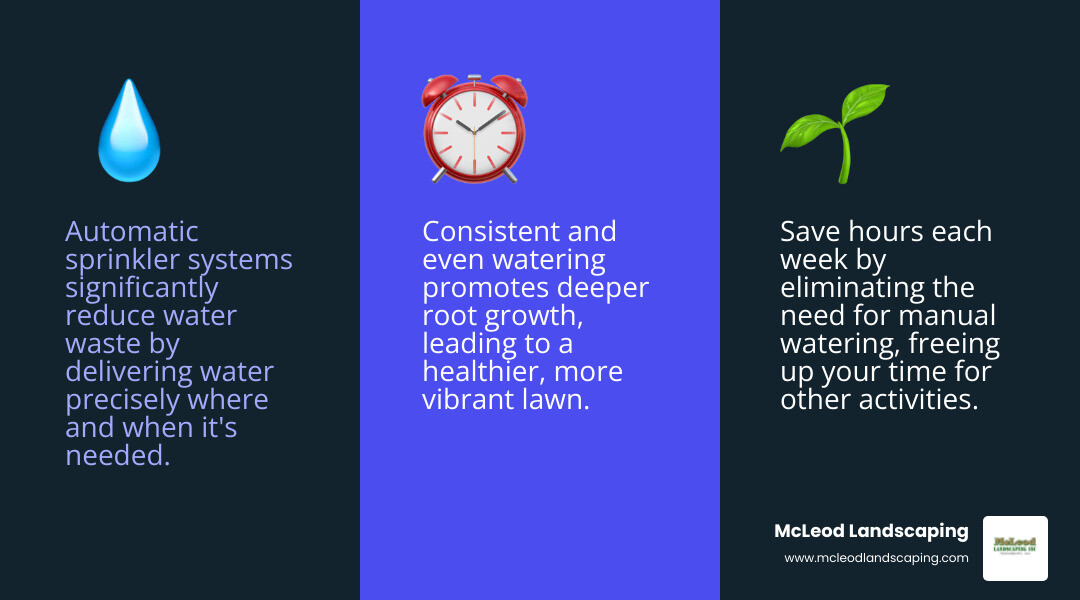
The installation of a sprinkler system is a rewarding project that results in a lush, green lawn without the daily chore of manual watering. Automatic sprinklers save water and keep your landscape looking its best by delivering water precisely where and when it’s needed.
This guide covers every step, from initial planning to final adjustments. Scott McLeod, owner of McLeod Landscaping Inc., has over three decades of experience in creating beautiful landscapes, including expert installation of a sprinkler system for residential and commercial properties. Our comprehensive guide will walk you through every step, ensuring your lawn thrives.
Handy installation of a sprinkler system terms:
Before you dig, thorough planning is the most crucial part of any installation of a sprinkler system. Careful assessment, smart design, and choosing the right components are vital for an efficient system. This groundwork ensures water efficiency, optimal coverage, and compliance with local codes. For more detailed insights, read our guide on Choosing the Right Irrigation System for Your Landscape.
The first step is understanding your property and water supply, which is crucial for designing an effective system.
Before digging, call 811 a few days in advance to have underground utility lines marked. This free service prevents dangerous and costly accidents. Never dig until all lines are clearly marked.
Next, check with your local building department in areas like Andover, MA, or Chelmsford, MA, for necessary permits. Municipalities often have specific ordinances regarding irrigation systems, including requirements for backflow prevention devices.
To design an efficient system, you need to know your water’s pressure and flow rate.
Understanding these measurements is crucial for designing an efficient system. For more details, see our guide on How to Install a Lawn Sprinkler System.
With your water supply assessed, it’s time to map your yard and create a blueprint for your system.
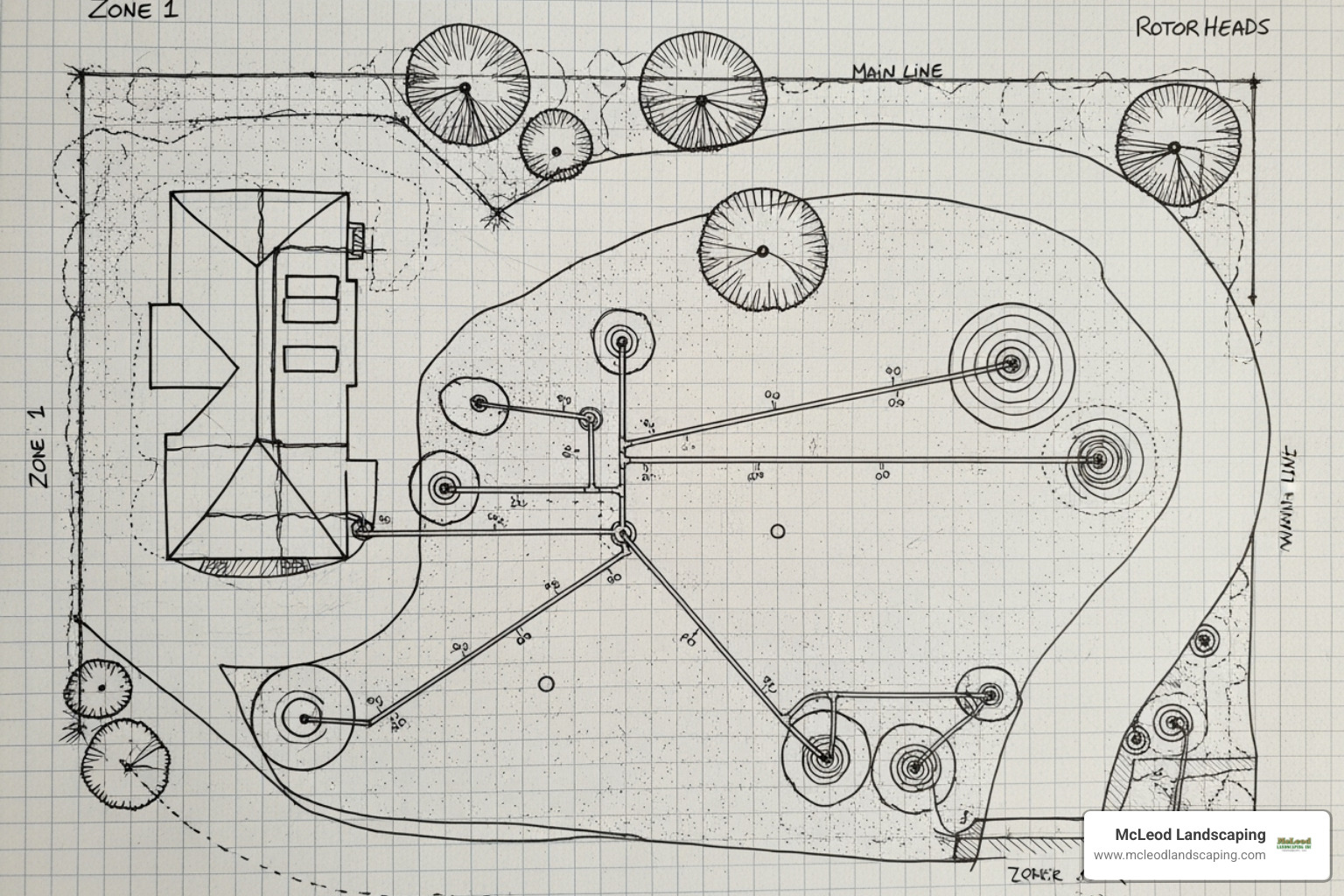
Selecting the right components is vital for a durable and efficient system. Here’s a breakdown of the main parts:
| Sprinkler Head Type | Ideal Use | Typical Spray Radius (Feet) | Precipitation Rate Considerations |
|---|---|---|---|
| Impact | Large lawn areas, durable | 15-30 | Can be high, good for established lawns. Installed 2-3 feet apart. |
| Fixed Pop-Up | Small-to-medium lawn areas, precise shapes | ~10 | Higher precipitation, good for smaller, uniform areas. Installed ~18 feet apart. |
| Rotary Nozzles | Medium-to-large lawn areas, water efficiency | 25-30 diameter | Lower precipitation rate, reduces runoff. Installed ~14 feet apart. |
| Large Area Rotors | Very large lawn areas (25’x25’+) | 25-52 | Lower precipitation, efficient for big spaces. Spaced 25-40 feet apart. |
| Small Area Spray / Rotating Stream | Smaller lawns (under 25’x25′) | 4-17 | Moderate to high, depends on nozzle. Spaced 8-17 feet apart. |
| Drip Irrigation | Flowerbeds, shrubs, trees, vegetable gardens | Targeted, no spray | Very low, targeted application directly to roots, highly efficient. |
Key components include:
For more on smart options, check out the Benefits of Installing a Smart Irrigation System.
With the planning complete, it’s time to begin the physical installation of a sprinkler system. This phase involves digging, connecting, and assembling the components into a functional irrigation network. For a general overview, you can refer to our article on How Are Irrigation Systems Installed?.
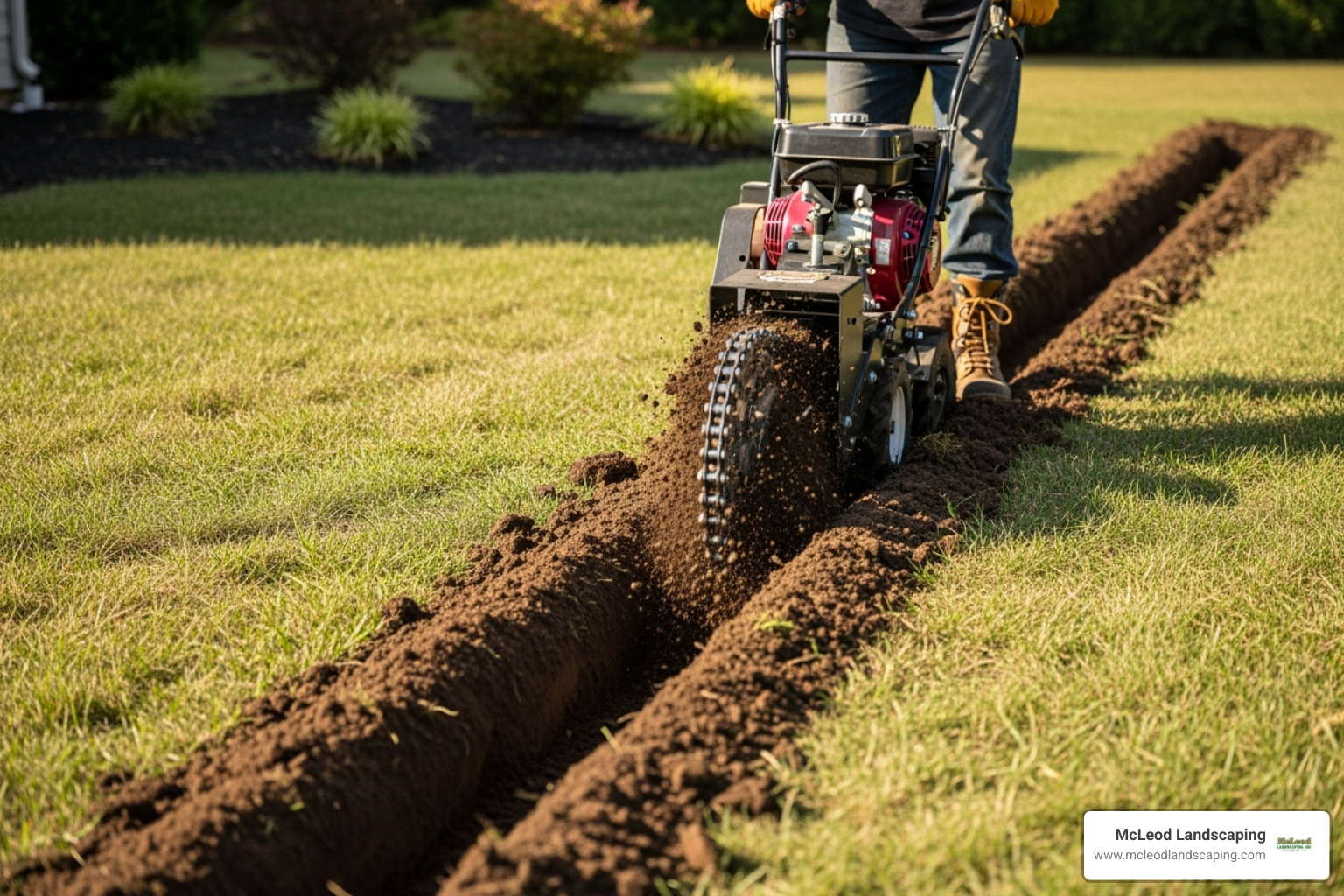
Trenching is labor-intensive but crucial for protecting your system. For small yards, you can dig by hand, but for larger properties, renting a gas-powered trencher is recommended. Many rental dealers in towns like Burlington, MA, offer delivery and pickup.
Trench depth is key for longevity. Main sprinkler lines should be buried 10 to 12 inches deep, while lateral lines can be 6 to 8 inches deep. Always check your local frost line requirements.
To get pipes under walkways or driveways, use a water-powered boring technique. Attach a jet spray nozzle to a PVC pipe and use water pressure to tunnel through the soil.
When laying pipes, make clean cuts. For PVC, apply solvent primer and then cement to both the pipe and fitting, giving it a quarter-turn for a solid bond. For Poly pipe, secure connections with clamps. Always leave enough space between valve connections for future maintenance. For more guidance, check out our guide on Putting in a Lawn Sprinkler System.
Connecting to the water main is a critical step in the installation of a sprinkler system.
First, shut off the main water supply to your house. Then, cut into the main line and install a tee fitting. If you’re not comfortable working with your main water line, hire a professional plumber.
Backflow prevention is required by code in most areas to prevent contaminated water from flowing back into your drinking water. A Pressure Vacuum Breaker Assembly (PVBA) is common. Install it according to local codes and manufacturer instructions.
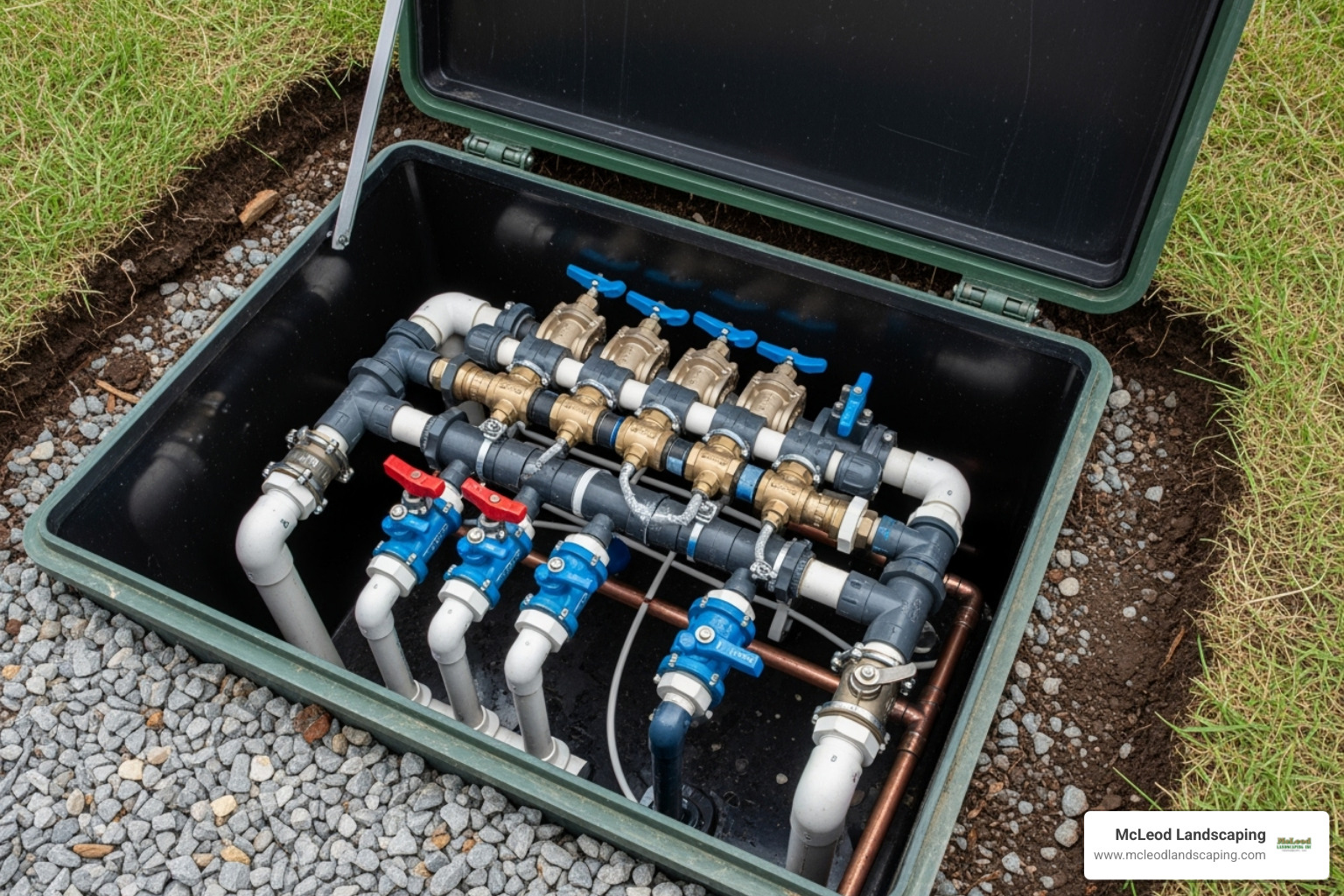
Your valve manifold is the control center where zone valves are grouped. You can build one or use a pre-made kit. Place the assembled manifold inside a valve box with about 2 inches of gravel at the bottom for drainage. For more details, explore our page on Install Irrigation.
With pipes in place, it’s time for the sprinkler heads and electrical connections.
Before attaching any sprinkler heads, flush your system by turning on the water and manually operating each valve to push out any dirt or debris.
When installing sprinkler heads, use flexible piping (swing pipe) to connect each head to the lateral line. This allows for easy height adjustment and prevents damage.
Choose the right nozzles for your coverage needs, then adjust the spray patterns to ensure proper head-to-head coverage. Impact heads can reach 15-30 feet, fixed pop-up heads spray about 10 feet, and rotary nozzles cover a 25-30 foot diameter.
The electrical wiring is straightforward. Run low-voltage direct burial wire from each valve to your controller. Use waterproof silicone-filled wire connectors for all splices to prevent moisture damage.
Mount your controller on a wall in a garage or shed. Run the wires through PVC conduit from the ground to the controller for protection. Connect the wires to the corresponding terminals.
To label your zones, strip and touch individual wires to a powered terminal on the controller. When a zone activates, you’ll know which wire controls it. Consider running extra wires for future expansion. For a detailed look at this process, see our guide on How to Install In-Ground Irrigation System.
With the physical installation of a sprinkler system complete, this final phase focuses on testing, fine-tuning, and long-term care. According to the EPA, properties with large irrigated landscapes can spend as much as 30% of their water bill on irrigation, so optimizing your system is key.
This phase focuses on testing and fine-tuning the system.
First, flush the system by running each zone to clear out any debris from the pipes. Next, check for leaks by running the system and inspecting all connections for pooling water or damp spots. Repair any leaks you find.
Now, adjust spray patterns. Run each zone and fine-tune the spray pattern, arc, and radius of each head. Ensure you have head-to-head coverage, where each head’s spray reaches the adjacent one. This is crucial for 100% coverage and prevents dry spots.
Once you’re confident everything is working, backfill the trenches. Overfill them slightly, as the soil will settle over time. Tamp the soil gently around the pipes to avoid damage.
Regular maintenance prevents costly repairs and ensures your system runs efficiently.
Routine inspections should be done monthly. Walk your property and look for signs of trouble like pooling water, dry spots, or damaged heads. Cleaning filters in sprinkler heads and valves is a simple task that prevents clogs and ensures proper water flow.
Common problems include:
For professional help, visit our Lawn Sprinkler System Contractor page.
In colder climates like Concord, MA, or Lowell, MA, winterizing your sprinkler system is essential to preventing freeze damage from expanding ice that can crack pipes and heads.
Taking these steps protects your investment and ensures your installation of a sprinkler system is ready for spring.
While a DIY installation of a sprinkler system can be rewarding, it can also present unexpected challenges. What starts as a weekend project can become complex when you encounter issues like tunneling under a walkway or tapping into your home’s main water line.
Here’s when calling in the experts might be your best bet:
If your property is complex, you’re facing challenging water main connections, or you simply want the peace of mind that comes with a warrantied, professional result, hiring an experienced company like McLeod Landscaping is often the best choice. With over 30 years of experience serving clients across the Merrimack Valley, including towns like Tewksbury, Andover, and Billerica, our team ensures your installation of a sprinkler system is designed for optimal performance. For professional help, explore our page on Irrigation System Installers.
When planning your installation of a sprinkler system, homeowners naturally have questions. Here are the most common ones we hear.
The depth of your sprinkler lines depends on their function and local climate. Main lines should be buried 10 to 12 inches deep to protect them from damage and frost. Lateral lines that run to individual sprinkler heads are typically buried 6 to 8 inches deep. However, always check your local building codes for specific requirements in your area before starting your installation of a sprinkler system.
The cost for a DIY installation of a sprinkler system varies based on yard size, component quality, and tool rental needs. On average, homeowners might spend anywhere from $500 for a basic system to $4,500 or more for larger installations. This wide range reflects the many variables involved.
Please note, these are average costs based on internet data and do not reflect actual pricing for professional services. For an accurate quote on professional installation, see our page on Cost to Install Lawn Sprinkler System.
The best time to water your lawn is early in the morning, typically between 4 a.m. and 10 a.m. Watering during this window is most efficient because it minimizes water loss from wind and evaporation, ensuring more water reaches the roots. It also reduces the risk of fungal diseases that can develop when grass stays wet overnight.
Morning watering allows moisture to soak deep into the soil before the day’s heat arrives, encouraging deeper root growth and making your lawn more drought-resistant. Avoid watering in the evening or midday.
You now have a roadmap for mastering the installation of a sprinkler system, a project that adds significant convenience and beauty to your home. A well-designed system saves you time, conserves water, and boosts your home’s curb appeal, giving you a healthy, green lawn with minimal effort.
Whether you choose a DIY approach or decide to bring in the experts, a beautiful, water-efficient landscape is an achievable and rewarding investment. It adds value and charm to your property, allowing you to enjoy a thriving outdoor space season after season.
Ready to transform your property and enjoy that dream lawn? Don’t hesitate to explore our expert irrigation and sprinkler services. We’re here to help you achieve a greener, healthier outdoor space you’ll love.
Contact McLeod Landscaping today at (978) 640-0957 or click here to schedule a consultation for retaining wall installation. Let our experienced team design and install a functional and visually appealing retaining wall that enhances your landscape.


1881 Main St Unit 1, Tewksbury, MA 01876