
Hardscape design ideas are the foundation of functional, beautiful outdoor spaces that extend your living area beyond four walls. Whether you’re a homeowner dreaming of a patio retreat or a property manager seeking low-maintenance solutions, hardscaping creates structure, defines zones, and adds year-round appeal to any property.
Quick Answer: Top Hardscape Design Ideas
Hardscaping refers to the permanent, built elements in your landscape—stone, concrete, pavers, wood, and other solid materials that create structure and function. Unlike softscaping (plants and gardens), hardscape features don’t grow or require watering, making them ideal for busy property managers and homeowners who want lasting results.
The benefits go beyond aesthetics. According to recent industry data, 58% of homeowners prioritize a strong connection with nature in their design choices, and hardscaping provides the framework to enjoy outdoor spaces comfortably and safely. These elements guide foot traffic, reduce maintenance, conserve water, control erosion, and boost property values—all while creating distinct zones for specific activities.
Modern hardscape design balances form and function. A well-planned patio becomes an outdoor dining room. A carefully placed retaining wall transforms a steep slope into usable terraces. Fire pits and outdoor kitchens turn backyards into entertainment hubs that extend the usable season well into fall and spring.
The key to successful hardscaping is integration. Your hardscape should complement your home’s architecture, work with the natural terrain, and blend seamlessly with surrounding plantings. Materials matter too—from the warm tones of natural stone to the clean lines of modern concrete pavers, each choice affects both appearance and longevity.
I’m Scott McLeod, owner of McLeod Landscaping, and over the past three decades I’ve designed and installed hundreds of hardscape design ideas for residential and commercial properties throughout the Merrimack Valley. From simple walkways to elaborate outdoor living spaces, I’ve seen how the right hardscaping transforms properties and creates spaces people actually use.

Basic Hardscape design ideas glossary:
To truly define hardscaping, we have to look at it as the “bones” of your property. While flowers may bloom and fade, hardscape elements provide structural integrity year-round. In the Merrimack Valley, where our winters can be tough, having a solid foundation of stone or concrete ensures your yard looks intentional even when the leaves are gone.
When we weigh hardscape vs softscape, we aren’t picking a winner; we’re looking for a partnership. Hardscaping manages the heavy lifting—guiding traffic, supporting soil on sloped lots, and creating flat surfaces for furniture. With the statistic that 58% of homeowners prioritize a connection to nature, our goal is to use these man-made structures to make nature more accessible.
By investing in professional hardscaping services, you create functional zones. Think of your yard like a house without walls: the patio is the living room, the outdoor kitchen is the heart of the home, and the walkways are the hallways that connect them all. This visual balance prevents your landscape from looking like a cluttered forest or a barren parking lot.
The magic happens when you blend hardscaping vs landscaping. Softscaping—the grass, shrubs, and trees—softens the hard edges of stone and concrete. We love using texture contrast, such as placing a smooth bluestone walkway next to a bed of feathery ornamental grasses.
Creating dedicated plant beds within or alongside your hardscape features allows for a more organic feel. If you are looking for backyard garden designs, consider “entangled” designs where pavers are spaced out to allow creeping thyme or moss to grow in the joints. This biophilic approach makes the transition between the built environment and the natural world feel effortless.

Modern hardscape design ideas lean toward minimalism and “transitional” styles—blending traditional materials with contemporary layouts. We are seeing a huge demand for modern landscape design that focuses on clean lines and neutral color palettes. Cool grays, charcoals, and “yin-yang” contrasts (like light pavers with dark borders) are incredibly popular right now.
To achieve a seamless transition from indoors to outdoors, we often recommend matching the floor level of your patio to your home’s interior floor. Using large-format pavers can mimic the look of indoor tiling, making your backyard feel like a true extension of your home. Adding elements like fire and water features creates a sensory experience that draws people outside regardless of the temperature.
Geometry is a powerful tool for creating focal points. While winding paths have their charm, many homeowners in areas like Concord and Westford are opting for linear patterns that lead the eye toward a specific feature, like a custom fireplace or a piece of sculpture.
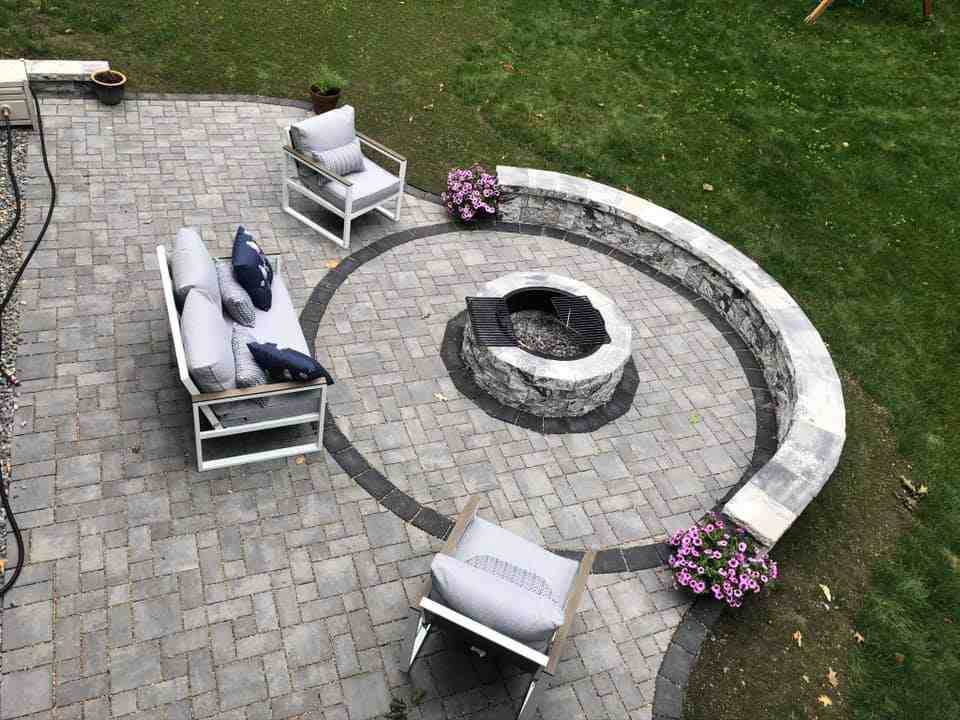
Using paver landscaping techniques, we can create intricate “rug” patterns under dining tables or circular patios that act as intimate conversation pits. If you’re looking for creative ideas for your interlocking paver walkway, consider mixing shapes—using rectangular planks for the main path and square accents at the intersections to add visual depth.
What’s hot in custom outdoor living right now? We’re seeing a move toward “industrial chic” and “natural luxury.”
If the patio is the living room, the outdoor cooking firepit or kitchen is the ultimate entertainment hub. These features provide comfort and social connection, turning a standard backyard into a destination. In the Merrimack Valley, a fire feature isn’t just a luxury—it’s a necessity if you want to enjoy your yard in May or October.
We specialize in custom fire pit ideas, ranging from traditional wood-burning stone circles to modern gas-powered linear fire tables. These features provide a natural gathering spot, offering warmth and a mesmerizing focal point that encourages guests to linger long after the sun goes down.
Building an effective outdoor kitchen requires more than just a grill. You need to consider the “work triangle” just like you would indoors.
Sustainability isn’t just a buzzword; it’s about building smart. Biophilic design principles—the idea of connecting humans more closely to nature—are at the heart of modern hardscaping. We use sustainable materials like locally sourced stone and permeable pavers to ensure that your beautiful new patio doesn’t create drainage headaches for your neighbors.
Proper retaining wall drainage is critical. Without it, hydrostatic pressure can cause even the strongest wall to fail. We also prioritize inclusive outdoor spaces by following ADA standards where applicable. This includes ensuring walkway installation services provide paths wide enough for wheelchairs and strollers, and using “tactile paving” to signal transitions for the visually impaired. For families, child-friendly safety means choosing non-slip textures and avoiding sharp edges on stone benches.
When you follow a professional retaining wall installation guide, you’re building for decades, not just seasons. Longevity comes from the foundation. We use durable stones like granite and bluestone that can handle the freeze-thaw cycles of the Northeast.
Accessibility is also about level transitions. We aim for “zero-entry” patios that have no tripping hazards between the back door and the stone surface. Slip-resistance is another factor; materials like sandblasted pavers or natural cleft stone provide excellent grip even when wet from a summer rainstorm or a splashing pool.
Choosing the right material is a balance of natural stone durability and your home’s architectural style. A colonial home in Billerica might look best with traditional brick or weathered fieldstone, while a modern build in Lowell might call for sleek, smooth concrete slabs.
During hardscape construction, we help you steer these choices. Below is a quick comparison to help you decide:
| Feature | Natural Stone (Granite, Bluestone) | Concrete Pavers (Unilock, Belgard) |
|---|---|---|
| Durability | Extremely High (lasts centuries) | High (engineered for strength) |
| Maintenance | Low (may need occasional power wash) | Low (easy to replace individual units) |
| Color Variety | Natural, earthy variations | Huge range of manufactured colors |
| Cost | Generally Higher | Mid-range to High |
| Installation | Requires expert masonry | Modular and faster to install |
Pricing for hardscaping varies wildly based on the materials chosen and the complexity of the site (especially if we’re dealing with steep slopes). Please note that these are average costs based on internet data and are not actual costs for McLeod Landscaping.
For a paver patio cost installed, you might see a wide range:
On the high end, complex projects involving retaining walls, outdoor kitchens, and integrated lighting can easily reach 3x the average cost of a standard flat patio. The project scale and the quality of the base material (the “unseen” part of the project) are the biggest drivers of value and longevity.
Your hardscape should feel like a natural extension of your house. For example:
It’s all about the sensory experience. The visual contrast between a flickering custom outdoor firepit and a bubbling stone fountain creates a “Zen” environment. The ambient sound of water masks neighborhood noise, while the fire provides warmth and light. This combination provides year-round utility—the water cools you in the summer, and the fire warms you in the fall.
Don’t just hire the person with the lowest bid. Look for:
At McLeod Landscaping, we believe that your yard should be more than just a patch of grass you have to mow. With over 30 years of professional expertise, we’ve helped residents in Tewksbury, Andover, Concord, and beyond turn their outdoor dreams into stone-cold reality. From functional retaining walls to luxury outdoor kitchens, our comprehensive Merrimack Valley services are designed to last a lifetime.
Ready to transform your property? Let’s start planning your hardscape design today. Whether it’s a small walkway or a complete backyard overhaul, we have the tools, the team, and the experience to get it done right.
Contact McLeod Landscaping today at (978) 640-0957 or click here to schedule a consultation for retaining wall installation. Let our experienced team design and install a functional and visually appealing retaining wall that enhances your landscape.

1881 Main St Unit 1, Tewksbury, MA 01876