
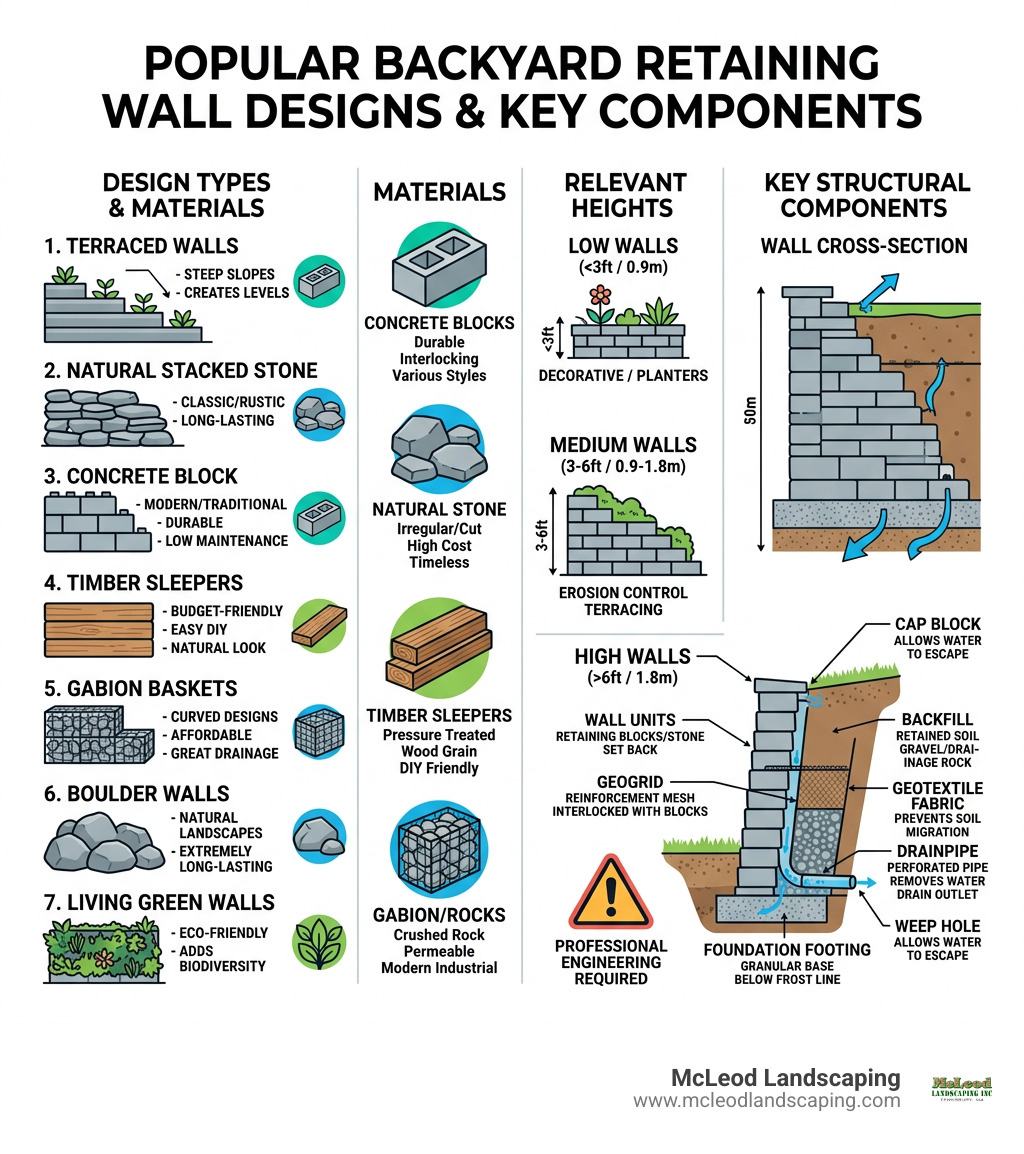
Backyard retaining wall design is one of the most impactful upgrades you can make to a sloped or uneven yard. Here’s a quick overview of the most popular design options:
| Design Style | Best For | Key Benefit |
|---|---|---|
| Terraced walls | Steep slopes | Creates multiple usable levels |
| Natural stacked stone | Classic/rustic yards | Lasts hundreds of years |
| Concrete block | Modern or traditional | Durable, low maintenance |
| Timber sleepers | Budget-friendly projects | Easy DIY, natural look |
| Gabion baskets | Curved designs, slopes | Affordable, great drainage |
| Boulder walls | Natural landscapes | Extremely long-lasting |
| Living green walls | Eco-friendly yards | Adds biodiversity and softness |
A retaining wall does more than hold back soil. It transforms a challenging, sloped backyard into a functional, beautiful outdoor space. Without one, slopes erode, water runs where you don’t want it, and large areas of your yard go to waste.
The good news? Modern retaining walls aren’t just structural — they’re design features. They can include built-in seating, lighting, planters, water features, and more.
Whether you’re managing a steep hill, dealing with runoff, or simply want to add depth and dimension to your landscape, a well-designed retaining wall is one of the smartest investments you can make.
I’m Scott McLeod, owner of McLeod Landscaping in Tewksbury, MA, with over 30 years of experience in backyard retaining wall design and hardscaping across the Merrimack Valley. In this guide, I’ll walk you through everything — from choosing the right materials to knowing when to call a professional.
Learn more about backyard retaining wall design:
At its core, the primary purpose of a retaining wall is to hold back soil and create level areas on a sloped site. For many homeowners in the Merrimack Valley—from the rolling hills of Andover to the riverfront properties in Lowell—this is a functional necessity. Without a wall, gravity eventually wins, leading to erosion and unusable “dead zones” in your yard.
A well-executed backyard retaining wall design solves several critical issues:

For more insights into how these structures work, check out our overview of landscape walls.
Choosing the right material is the first step in the design process. You want something that complements your home’s architecture while standing up to our local climate—especially the freeze-thaw cycles that can wreak havoc on poorly built structures.
Each material offers a different balance of cost, durability, and style. Here is a breakdown of the heavy hitters:
Once you’ve picked your material, it’s time to get creative. A wall doesn’t have to be a flat, boring barrier.
If there is one thing I want you to take away from this guide, it’s this: Water is the enemy of a retaining wall. Most wall failures aren’t caused by the weight of the soil itself, but by “hydrostatic pressure”—the massive weight of water-saturated soil pushing against the back of the wall.
To prevent your wall from leaning or collapsing, we follow strict engineering standards:
For a deeper dive into the technical side, this guide on engineering a retaining wall is an excellent resource.
Can you build a retaining wall yourself? It depends on the scale. A “knee wall” under 2 feet high for a flower bed is a great weekend project. However, anything structural or tall requires heavy machinery and precise calculations.
If you’re tackling a small project, our retaining wall installation guide can help. But remember: a 4-foot high, 15-foot long wall can hold back 20 tons of saturated soil. That is not something you want to get wrong. Professional crews have the equipment to compact the base properly and the expertise to handle permit requirements, which are often triggered for walls over 3 or 4 feet.
Budgeting is a major part of backyard retaining wall design. Please note that the following figures are average costs based on internet data and are not actual costs for McLeod Landscaping.
| Material | Average Internet Price (Per Sq. Ft.) | Wide Range (Low to High) |
|---|---|---|
| Timber | $30 | $15 – $100 |
| Concrete Block | $60 | $30 – $200 |
| Natural Stone | $120 | $50 – $400 |
For a more detailed breakdown, see our article on how much a retaining wall costs. If the project seems daunting, it may be time to consult professional retaining wall contractors.
Gabion walls are widely considered the most cost-effective, followed closely by timber sleepers and basic cinder blocks. If you are looking for a DIY-friendly, low-cost option, check out our wire rock retaining wall guide.
In most Massachusetts towns, including Concord and Chelmsford, a permit is required for any wall over 4 feet tall. However, some local codes are stricter and require engineering for anything over 2 or 3 feet. Always check with your local building department before you dig.
The “big three” of wall stability are:
A successful backyard retaining wall design is the perfect marriage of engineering and art. It protects your property while creating new spaces for your family to enjoy. Whether you’re dreaming of a terraced garden in Andover or a sleek, modern concrete wall in Tewksbury, the right design will pay dividends in both curb appeal and property value for decades.
At McLeod Landscaping, we bring over 30 years of experience to every project in the Merrimack Valley. We don’t just stack blocks; we build lasting structures that stand up to the toughest New England winters.
Ready to reclaim your sloped yard? Start your backyard transformation with us today.
Contact McLeod Landscaping today at (978) 640-0957 or click here to schedule a consultation for retaining wall installation. Let our experienced team design and install a functional and visually appealing retaining wall that enhances your landscape.


1881 Main St Unit 1, Tewksbury, MA 01876